
Every spring, a single number travels further than the research behind it. A country climbs eleven places, or slips nine, and the figure becomes a headline, a talking point, a line in a briefing note. What rarely travels with it is the machinery that produced it: the questionnaires, the case files, the weighting decisions, and the long-running argument over what press freedom actually means.
That gap matters, because there is no single, universally accepted way to assess press freedom. Several organisations do it, using different definitions and different methods, and they routinely disagree with one another. Reading a rank as a precise measurement is a category error. Reading it as an informed judgment about the environment journalists work in is closer to what it is.
What these assessments are actually measuring
Most indices begin with a definition, and the definition shapes everything downstream. Reporters Without Borders (RSF) describes press freedom as the ability to identify, gather and disseminate news and information “in accordance with journalistic methods and ethics, without unnecessary risk” of bodily harm, psychological distress, or professional harm. RSF is also explicit about scope: its World Press Freedom Index does not measure the quality of journalism, and it does not rank public policies as such – even though policy plainly shapes the environment.
Freedom House grounds its framework in the Universal Declaration of Human Rights, adopted by the UN General Assembly in 1948, and applies the same standard to every country regardless of geography, ethnic or religious composition, or income level. A central premise of its methodology is that legal guarantees are not sufficient on their own. Both rules and actual practice are scored, with greater emphasis placed on implementation. A country with strong constitutional protections that are weakly enforced can therefore score lower than one with more modest laws that are broadly respected.
That distinction – de jure versus de facto – runs through almost every serious assessment. It is also the first place two indices can diverge while both claim to be measuring the same thing.
Four kinds of evidence keep showing up
Different frameworks use different wording, but the underlying questions cluster into four areas:
- Legal framework. Whether journalists can work without censorship, criminal penalties, or excessive civil liability – and whether crimes against the press are prosecuted rather than tolerated.
- Political context. The degree of media autonomy from state and political pressure, and whether outlets can hold officials to account in the public interest.
- Economic pressures. Ownership concentration, dependence on state advertising or subsidies, and the commercial constraints that decide which newsrooms survive.
- Safety. Physical attacks, detention, surveillance, harassment – including online – and the impunity that follows when those acts go unpunished.
None of this is a checklist of laws alone. The interesting part of any index is how organisations decide to weigh a restrictive statute against, say, a single unsolved killing of a reporter – and those weighting choices are where the methodological arguments live.
How five major assessments compare
The table below shows why two reports can describe the same country very differently. They are not measuring the same thing with the same instruments, even when they use the same phrase.
| Assessment | Who runs it | Coverage | Scale | Core method |
|---|---|---|---|---|
| World Press Freedom Index | Reporters Without Borders (RSF) | 180 countries and territories | 0–100, where 100 is most free | Expert questionnaire covering five indicators, combined with a tally of abuses |
| Freedom in the World (press freedom indicator D1) | Freedom House | 195 countries and 13 territories (2026 edition) | 0–4 points per question; Free / Partly Free / Not Free | Analyst scoring against a fixed checklist, then regional consensus review |
| Media freedom indices | V-Dem Institute, University of Gothenburg | Around 200 polities, back to 1789 | Interval estimate on a 0–1 scale, with uncertainty ranges | Bayesian measurement model over expert codings |
| Killed / Imprisoned / Missing datasets | Committee to Protect Journalists (CPJ) | Case-level, worldwide | Counts, not a composite ranking | Independent case verification using at least two credible sources |
| Media Development Indicators | UNESCO | Applied country by country | Qualitative framework, not a league table | National media-landscape assessment across five categories |
Sources: RSF methodology for the 2026 Index; Freedom House Freedom in the World 2026 methodology; V-Dem methodology v16 (March 2026); CPJ data methodology (2025); UNESCO Media Development Indicators. Figures reflect each organisation’s most recent published methodology as of October 2026.
Inside the World Press Freedom Index
RSF’s index is the most widely quoted, so its mechanics are worth following closely. Each country or territory receives a score from 0 to 100, built from two components: a quantitative tally of abuses against journalists and media, and a qualitative analysis based on responses to an RSF questionnaire, available in 25 languages and completed by press freedom specialists.

The qualitative side is divided into five contextual indicators, each scored separately and each contributing equally to the global score. The 2026 questionnaire asks 35 questions and sub-questions on political context, 26 on the legal framework, 26 on the economic context, 22 on the sociocultural context, and 15 on safety. The safety indicator is split: the 15 questions carry two-thirds of its value, while a separate abuses score carries the remaining third.
That abuses score is where the mathematics gets unusual. It is calculated from a weighted count of incidents relative to the logarithm of a country’s population, using population figures from the World Bank. Different categories carry very different coefficients:
| Abuse category | Coefficient |
|---|---|
| Murder | 100 |
| Abduction or enforced disappearance | 50 |
| Detention | 25–50, depending on length |
| Media outlet ransacked, destroyed, closed, or suspended | 1 |
Two details illustrate the design philosophy. When no abuse is recorded in a given year, the abuses score is 100; as recorded abuses rise, the score declines toward 0. And because a murder carries a coefficient one hundred times larger than the ransacking of an outlet, the index encodes a clear judgment that threats to life outweigh damage to property. Whether that ranking of harms is correct is a question of values, not arithmetic – and it is precisely the kind of choice that makes indices debatable.
The 2026 edition, published on 30 April, recorded the lowest global average in the index’s 25-year history. For the first time, more than half the world’s countries fell into the “difficult” or “very serious” categories, with the legal indicator showing the sharpest decline. Norway held the top position for the tenth consecutive year, while Eritrea came last for the third year in a row.
How Freedom House arrives at a different number
Freedom House does not publish a standalone press freedom ranking alongside RSF’s. Press freedom is captured through a single question – D1, “Are there free and independent media?” – inside its broader civil liberties battery. A country earns 0 to 4 points for each of 10 political rights indicators and 15 civil liberties indicators, and the combined totals determine the status of Free, Partly Free, or Not Free.
The scoring process relies on human judgment, applied consistently. The 2026 edition involved 134 analysts and 28 advisers, who gather evidence from news reporting, academic analysis, NGO research, and on-the-ground observation. Proposed scores are then discussed and defended in regional review meetings until a consensus emerges. Analysts use the previous year’s score as a benchmark, and a score is typically changed only when a real-world development – a crackdown, a new restrictive law, a first free election – warrants it.
Freedom House once published a separate Freedom of the Press report, running from 1980 until its final 2017 edition, which scored legal, political, and economic environments across 199 jurisdictions. Its retirement is a reminder that these instruments are products, not permanent fixtures: they evolve, merge, and occasionally disappear.
Modelling uncertainty instead of assigning a rank
Academic projects take a different route. V-Dem does not publish a simple 1-to-180 league table. It gathers judgments from about five experts per country-year, drawn from a pool of more than 4,000, and feeds those ratings into a Bayesian measurement model that estimates both each expert’s reliability and how their perception of the scale may differ from others’.
The output is not a single score but a point estimate plus a credible interval. That is a meaningful design choice: V-Dem treats media freedom as something that can be estimated with measurable uncertainty, and two countries are considered meaningfully different only when their confidence ranges do not overlap. For researchers, this is more useful than a hard rank, because it prevents small, statistically meaningless gaps from being read as real differences.
Other frameworks sit at the other extreme. UNESCO’s Media Development Indicators deliberately avoid ranking at all, offering a five-category framework for diagnosing a national media landscape and guiding policy. IREX’s Media Sustainability Index, which ran for nearly two decades before being replaced by its Vibrant Information Barometer in 2021, used local expert panels scoring five objectives from 0 to 4 – an approach that put weight on a media sector’s economic viability, not only its legal protections.
Counting the abuses themselves
Beneath the composite scores lies more granular documentation. CPJ has tracked journalists killed, imprisoned, or missing in connection with their work since 1992. Each case is independently confirmed through at least two credible sources, such as family members, colleagues, eyewitnesses, legal representatives, or local press freedom groups. CPJ states that it never relies on a single unverified account.
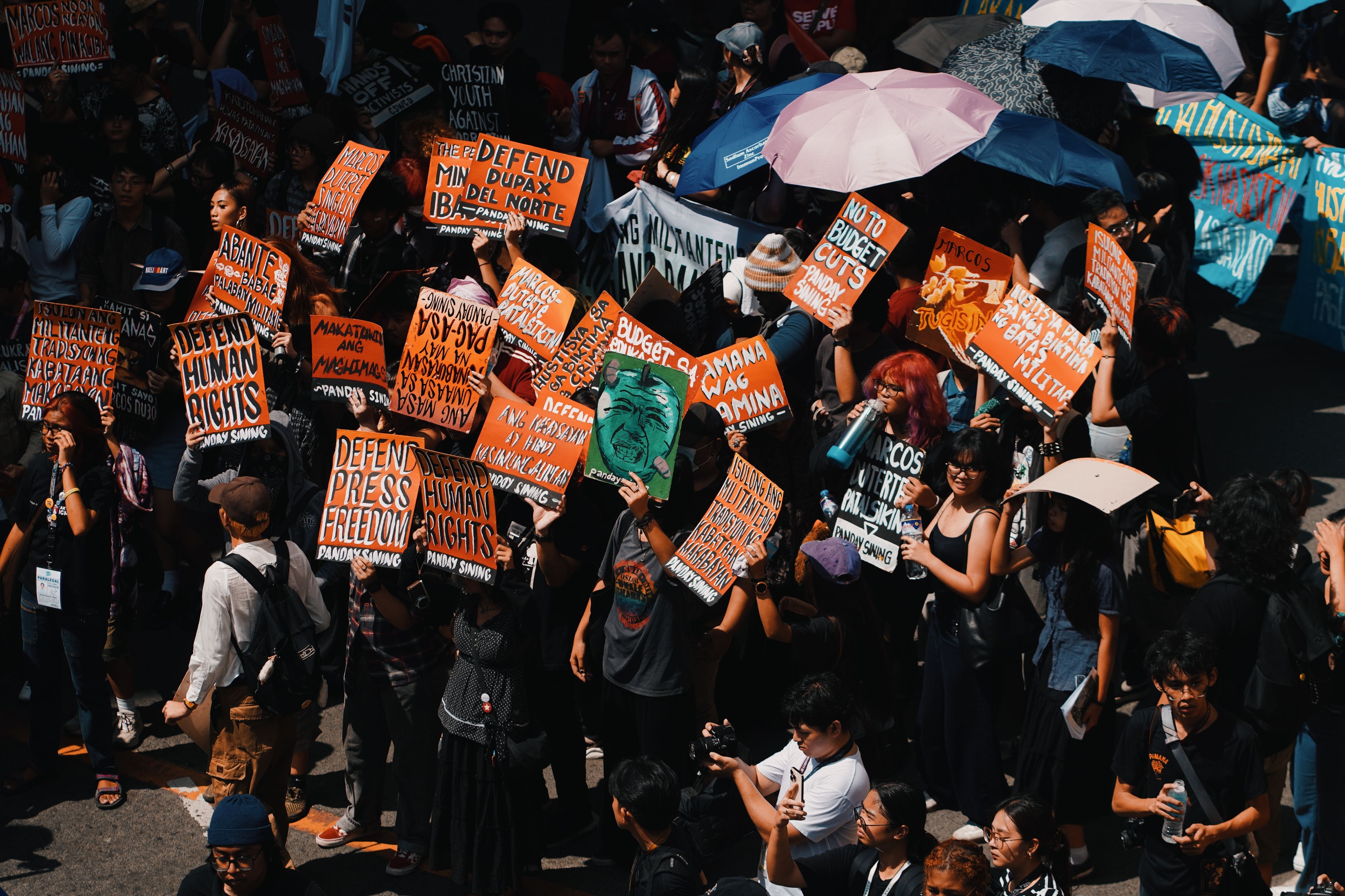
Its methods have been updated to keep pace with the field. The imprisoned dataset began as an annual census capturing a snapshot at midnight on 1 December; in 2025, CPJ added dynamic tracking that records detentions and releases on a rolling basis, so the picture is not frozen to a single date. CPJ has also wound down an instrument of its own: the Global Impunity Index, launched in 2008 to rank countries by unsolved journalist murders per capita, was paused in October 2025 so the organisation could review the tool and redirect resources toward accountability work. Indices, in other words, are not permanent – and even their creators reassess them.
Why a country’s rank can move without much changing
Three mechanics explain most year-on-year surprises.
First, several indices use the previous year’s score as a benchmark. Under Freedom House’s method, a score is typically changed only when a development during the coverage year warrants it. Small movements therefore tend to reflect specific events – a new law, a crackdown, an election – rather than a wholesale reassessment of a country.
Second, rank and score are not the same thing. A country can improve its position because countries above it fell, even if its own score declined. RSF has itself noted that some rises in its index are misleading in this sense. Conversely, a score can rise while the rank falls. The trend in the score is usually more informative than the position in the table.
Third, any single number compresses a complicated environment. Methodological debate surfaces every year, and not in only one region: governments, press councils, and researchers frequently dispute particular results, and official responses sometimes offer additional context about what a score does and does not capture. That scrutiny is part of how the tools evolve – RSF substantially revised its methodology in 2013 and again in 2022, with the changes reviewed by a committee of external experts.
What the numbers are good for – and what they are not
Indices are best understood as advocacy instruments with analytical uses, not scientific measurements. Their stated purpose is often to create pressure through comparison; RSF describes its index as being based on “the principle of emulation between states.” That is why the annual release reaches governments, diplomats, and international bodies, and why the direction of travel over several years tends to say more than any single year’s position.
The criticisms are well documented and worth taking seriously. A peer-reviewed analysis of ranking methodologies has argued that composite indices can present a homogenised view of “the media” that masks real differences between platforms, outlets, and owners. India’s NITI Aayog has questioned the transparency of RSF’s process, noting that question-level scores and respondent lists are not published and that a relatively small expert sample is asked to assess entire countries. Other commentators have pointed out a structural quirk: because rankings are relative, a country’s performance can look better or worse depending on what happens elsewhere.
The defenders make a simpler case. The indices draw on expert knowledge and are used consistently across many countries and many years, which makes broad comparisons possible where none otherwise would be. They raise public awareness of threats to journalism, and they give domestic advocates a benchmark to cite. Both things can be true at once: the numbers are imperfect, and they are also among the few tools available for looking at the world in the same frame.
Frequently asked questions
What is the World Press Freedom Index?
It is an annual ranking of 180 countries and territories published by Reporters Without Borders since 2002. Each receives a score from 0 to 100, where 100 represents the highest level of press freedom, based on a survey of experts and a tally of abuses against journalists.
Are the rankings based on opinions or on hard data?
Both. RSF combines a qualitative questionnaire answered by journalists, researchers, and media lawyers with a quantitative count of recorded abuses. Freedom House uses analyst scoring against a fixed checklist. V-Dem uses expert codings processed through a statistical model. In every case, judgment is combined with documented events.
Why do different rankings give different results for the same country?
Because they define press freedom differently, cover different time periods, and weigh harms differently. One index may emphasise the legal framework, another the safety of journalists, and another a media sector’s economic sustainability. A country can rank well on one and poorly on another without either result being wrong.
Does a low ranking mean a country has no independent media?
Not necessarily. A composite score summarises an environment, and environments vary within countries. A low overall rank may reflect pressure in one area – such as legal restrictions or safety – even where independent outlets continue to operate. Disaggregated indicator scores, where published, are more informative than the headline position.
Can a country’s ranking be appealed or corrected?
Indices generally do not operate formal appeals processes, though organisations do revise data when new information emerges. Changes usually come through methodological review rather than dispute resolution. RSF’s 2013 and 2022 revisions, and CPJ’s ongoing updates to its datasets, are examples of how assessments evolve over time.
What is the difference between press freedom and freedom of expression?
Freedom of expression is the broader right, applying to everyone, and it is protected – with limits – under instruments such as Article 19 of the Universal Declaration of Human Rights. Press freedom focuses more narrowly on the conditions for gathering and distributing news, including the safety of journalists and the independence of media organisations.
Reading a rank in context
A press freedom score is less like a temperature reading and more like a court judgment: it reflects a definition, a set of rules for weighing evidence, and a decision about which harms matter most. None of that makes the number useless. It makes it a starting point.
The next time a ranking appears, the more useful question is not who moved up or down, but which indicator drove the change, what period it covers, and what the source counts as press freedom in the first place. Those answers are usually in the methodology – the part that rarely makes the headline, and the part that decides what the headline means.