
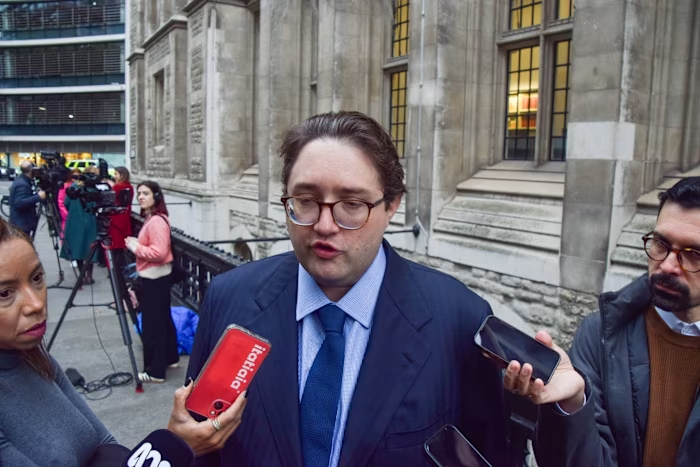
Pogust Goodhead, the London law firm known for major environmental and consumer group actions, is facing a difficult test of leadership, finances, and public confidence.
The removal of cofounder and former chief executive Tom Goodhead in 2025 was followed by allegations about spending, governance, and relations with litigation funders. Goodhead denies wrongdoing, while the firm says new management has strengthened oversight and moved the business forward.
Allegations Place Former Leadership Under Scrutiny

The controversy over Thomas Goodhead’s reported lifestyle has become central to questions about how the rapidly expanding firm was managed.
Media reports citing an interim investigation commissioned by the new board alleged excessive and uncontrolled expenditure under Goodhead’s leadership. Reported items included private aircraft, helicopter travel, luxury accommodation, yacht events, and expensive corporate hospitality.
Travel and hospitality costs were reportedly above £5 million across 2023 and 2024. These remain allegations rather than proven findings in a court judgment.
Goodhead has rejected claims that he misused litigation money for personal purposes. He has said the spending supported legitimate international business and that corporate hospitality was comparable with practices at other major City firms.
Goodhead has also maintained that relevant expenses were settled through his director’s loan account. He described his removal as a boardroom coup linked to disagreements with the firm’s financial backers.
Heavy Funding Increases Pressure on the Firm
The dispute is especially sensitive because Pogust Goodhead built its growth strategy around exceptionally large and costly group claims.
In 2023, US investment manager Gramercy agreed a reported $552 million funding package with the firm. Additional financing followed as the business continued pursuing cases that could take years to produce fees.
This financial model created intense pressure to control costs and maintain investor confidence. Any questions about spending or governance therefore carried consequences beyond the reputation of individual executives.
Leadership changes accelerated during 2025. Goodhead was replaced as chief executive by former chief operating officer Alicia Alinia, later left the firm, and ceased to be a director.
A restructured board introduced more independent oversight. The firm has stated that funders do not control legal strategy and that its lawyers remain responsible for client decisions.
This is an important distinction in a profession where independence from outside capital is essential.
Major Client Cases Remain the Critical Test

The turmoil arrived while Pogust Goodhead was handling litigation of enormous scale. Its most prominent work includes claims connected to the 2015 Mariana dam disaster in Brazil.
The case was brought against mining company BHP on behalf of hundreds of thousands of claimants.
Pogust Goodhead has also represented clients in extensive diesel emissions proceedings involving major vehicle manufacturers.
Such cases require stable teams, long term financing, and trust among claimants, courts, funders, and partner firms. Leadership departures and reports of financial strain can therefore create practical risks beyond reputational damage.
The new management must demonstrate that case preparation, client communication, and professional independence remain protected despite the internal upheaval.
Successful governance reforms will matter as much as public statements, particularly while expensive proceedings continue and financial returns remain uncertain.
Conclusion
Pogust Goodhead now faces a dual challenge. It must separate its current operations from allegations surrounding its former leader while proving that its ambitious litigation model is financially sustainable.
Goodhead’s denials mean the spending claims should be presented carefully and fairly. However, the controversy has already exposed the risks of rapid expansion supported by external capital.
The firm’s future will depend on transparent oversight, disciplined spending, independent legal judgment, and consistent delivery for clients whose cases remain its most important responsibility.